The 8 Best Value Golf Balls of 2026
The balls that deliver the most performance per dollar — from Costco's cult urethane ball to the value-premium tour balls and the promo-priced premium options that punch above their price. Ranked by price-to-performance, synthesized from expert reviews, robot testing, lab teardowns, and community feedback. Every score is transparent. Every claim is sourced.
Short answer: The Kirkland Signature is the best value golf ball of 2026 — MyGolfSpy's Best Value Ball of 2025, a genuine cast-urethane ball for about $1.50 a ball that out-spins a Pro V1 on full irons and wedges. Want real urethane without the Costco gate? The Maxfli Tour ($39.99). Softest feel for the least money? The Callaway Supersoft (~$27). Genuine tour performance for less? The Srixon Z-Star.
Quick picks
At a glance
| # | Ball | Score | Price |
|---|---|---|---|
| 1 | Kirkland Signature | 8.6 | $17.49 |
| 2 | Maxfli Tour | 8.7 | $39.99 |
| 3 | Callaway Supersoft | 8.4 | $26.99 |
| 4 | Srixon Z-Star | 9.0 | $54.99 |
| 5 | Srixon Z-Star XV | 9.1 | $49.99 |
| 6 | Titleist AVX | 8.9 | $49.99 |
| 7 | Bridgestone Tour B XS | 9.1 | $54.99 |
| 8 | Callaway Chrome Tour | 9.3 | $57.99 |
Prices are per dozen at MSRP (Kirkland sold as ~$34.99 per 2-dozen box). Premium tour balls discount via promotions; value balls street-price below MSRP. Ranked by price-to-performance, not raw score.
How we picked these
We researched the 14 most-reviewed golf balls of 2026 and scored each with our weighted scoring system: 35% expert reviews, 25% data-driven robot and lab testing (MyGolfSpy Ball Lab, Today's Golfer's 62-ball robot), 30% forum/community opinion, and 10% retail reviews. Then — unlike our overall ball ranking — we ranked these eight by price-to-performancerather than raw score: the balls that deliver the most ball for the money. That means the cheapest genuine urethane balls lead, the value-premium tour balls follow, and a premium ball only earns a spot if it punches above its price. Each pick wins on a specific, different value angle — from cheapest-urethane to softest-cheap-feel to the best tour ball you can actually get on promotion.
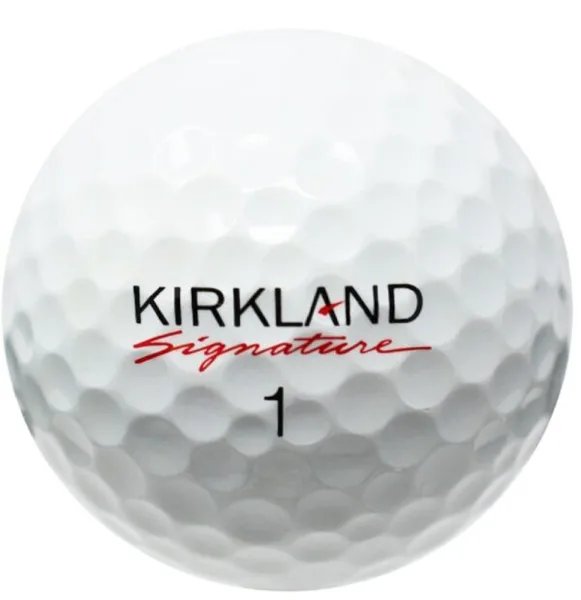
The value benchmark of the entire category and MyGolfSpy's Best Value Golf Ball of 2025 — a genuine three-piece cast-urethane ball for roughly a third of tour-ball price (about $1.50 a ball, sold ~$34.99 per 2-dozen box at Costco) that actually out-spins a Pro V1 on full irons and wedges. The current Performance+ core also fixed the old driver-spin problem: in MyGolfSpy's robot test it was slightly longer and straighter off the tee than the Pro V1. The honest catch is consistency — the Ball Lab teardown rated its compression (individual balls 88–103), weight, and diameter variation 'Poor,' and the feel runs firmer than a premium ball.
WHAT SOURCES LOVE
- +MyGolfSpy's Best Value Ball of 2025 (~$1.50/ball)
- +Out-spins a Pro V1 on full irons & wedges
- +Real cast-urethane cover; longer & straighter than a Pro V1 off the tee
WHAT TO KNOW
- –'Poor' unit-to-unit consistency (88–103 compression)
- –Firmer feel, less greenside bite; Costco membership + stock-outs
Bottom line: Nothing in golf delivers this much urethane ball for the money — go in clear-eyed on feel and consistency and the on-course gap is far smaller than the price gap.
Read full review →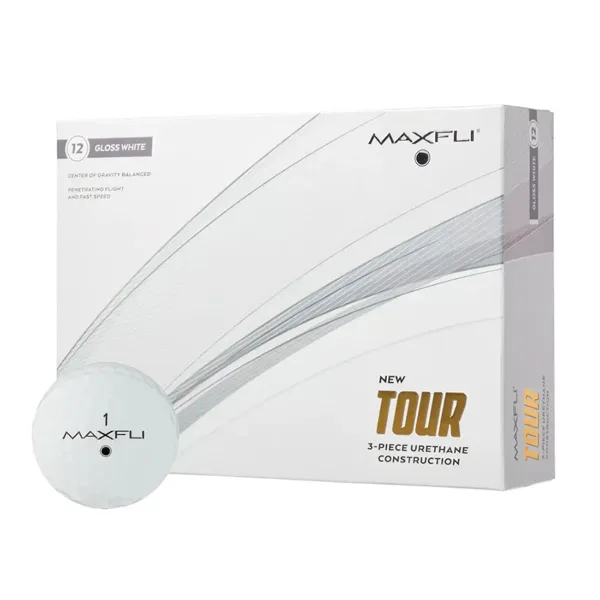
DICK'S' in-house value-urethane ball and one of the smartest dozens in golf — a three-piece cast-urethane ball that delivers most of the premium experience for $39.99, with multi-buy deals (2 dozen $70, 4 dozen $120) that push it lower still. MyGolfSpy's Ball Lab rated its compression consistency above average with no significant defects — a half-step up in build quality from the Kirkland. The honest limits: it spins about 10% less than a Pro V1 on full wedges, its tester called it 'a very average golf ball,' the compression spec is murky (Maxfli ~95, MyGolfSpy ~85), and it's effectively exclusive to DICK'S and Golf Galaxy.
WHAT SOURCES LOVE
- +Most of the urethane experience for $39.99 (cheaper in multi-buys)
- +Above-average build consistency — a notch above the Kirkland
- +Genuine cast-urethane cover and feel
WHAT TO KNOW
- –~10% less wedge spin than a Pro V1; 'a very average golf ball'
- –DICK'S / Golf Galaxy exclusive; compression spec varies by source
Bottom line: If the Kirkland's Costco gate or quality variance bothers you, the Maxfli Tour is the value-urethane pick — better-built, freely available, and still a fraction of tour-ball price.
Read full review →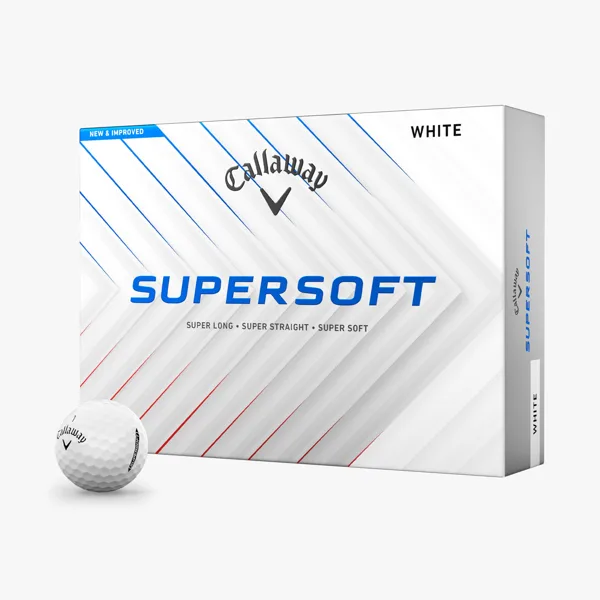
The best-selling ball in golf and the definitive soft-feel value pick — a 2-piece, ~41-compression ball with a non-urethane Hybrid cover that delivers a pillowy feel and a straight, slice-taming flight for about half a tour ball's price (~$26.99, often nearer $25 on Amazon). It even holds its own for distance at slower swing speeds, climbing into the upper third of a robot field for carry at the slowest driver speed. The honest limits are distance at speed and greenside spin — it's one of the shortest balls for a fast swing and won't bite a firm green.
WHAT SOURCES LOVE
- +Best-selling ball in golf; ~$27/dz (often ~$25)
- +Among the softest balls made (~41 compression); pillowy off every club
- +Straight, forgiving flight; durable non-urethane cover
WHAT TO KNOW
- –One of the shortest balls at faster swing speeds
- –Low spin won't hold firm greens; not a urethane ball
Bottom line: For slower-to-moderate swingers and value seekers who prize soft feel and a straight ball over premium spin, nothing cheaper feels this good.
Read full review →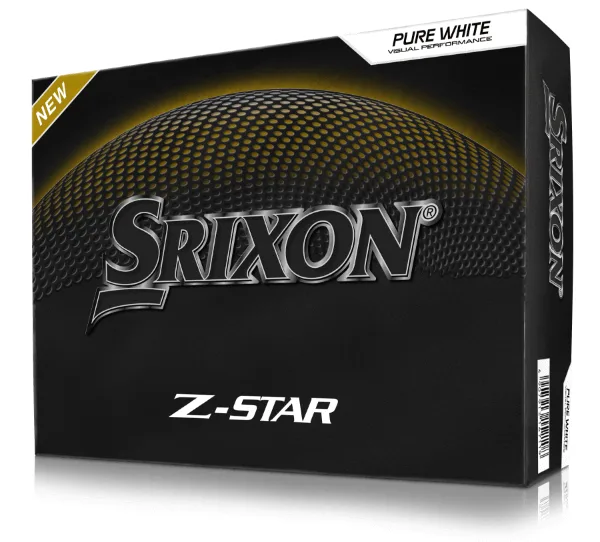
The consensus value pick against the Pro V1 — a genuine tour ball (a Hot List family, played by Hideki Matsuyama and Shane Lowry) tuned to the softest feel in the premium tier, and the smart-money way into real tour performance. It finished second of 62 balls for approach play in Today's Golfer's robot test, and with Srixon's near-constant buy-2-get-1 deals and sub-MSRP street pricing (often ~$45 on Amazon) it routinely costs meaningfully less than a $55 Pro V1. The trade-off is distance — it's the shortest Z-Star at high speed and built for 90+ mph swings.
WHAT SOURCES LOVE
- +2nd of 62 balls for approach play (Today's Golfer)
- +Softest feel in the premium urethane tier
- +Frequent buy-2-get-1 deals + ~$45 street price undercut the Pro V1
WHAT TO KNOW
- –The shortest Z-Star at high speed — not a distance ball
- –Best for 90+ mph; build consistency good, not class-leading
Bottom line: If you want a no-compromise tour ball but not the no-compromise price, the Z-Star is the genuine-tour-performance-for-less benchmark.
Read full review →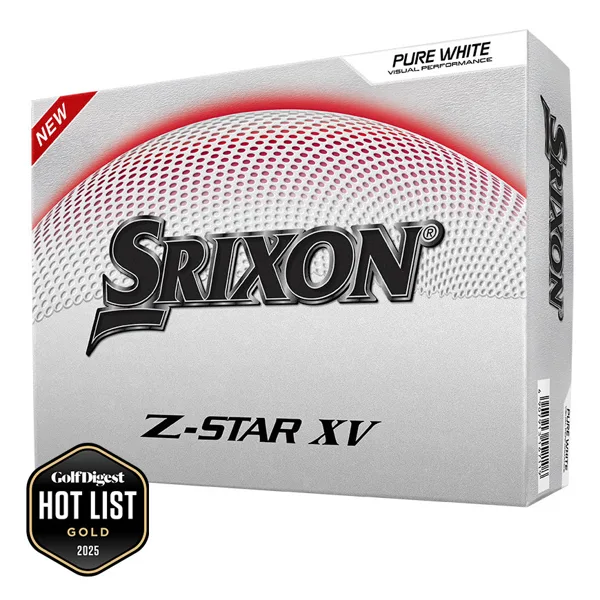
The firmest, fastest ball in Srixon's tour line and the value-premium distance pick — a 102-compression, three-piece urethane ball built for 105+ mph swings that finished second only to the Maxfli Tour X for overall carry in MyGolfSpy's 2025 robot test, with an unusual low-driver/high-iron spin profile. Hideki Matsuyama used the 2025 XV to break the PGA Tour's 72-hole scoring record, it made the Golf Digest Hot List, and at $49.99 a dozen it undercuts the Pro V1, Chrome Tour, and TP5. The honest knocks are a firm, clicky feel and merely-average lab build consistency.
WHAT SOURCES LOVE
- +2nd for overall carry in MyGolfSpy's 2025 robot test
- +Low driver spin + high iron spin — distance that still stops
- +$49.99 — undercuts the Pro V1, Chrome Tour & TP5
WHAT TO KNOW
- –Firm, clicky feel (102 compression) — harsher in the cold
- –Built for 105+ mph; only 'average' lab consistency
Bottom line: For a fast swinger who wants a true tour cover and tour-class distance without the $55–58 sticker, the XV is the best value-premium ball in golf.
Read full review →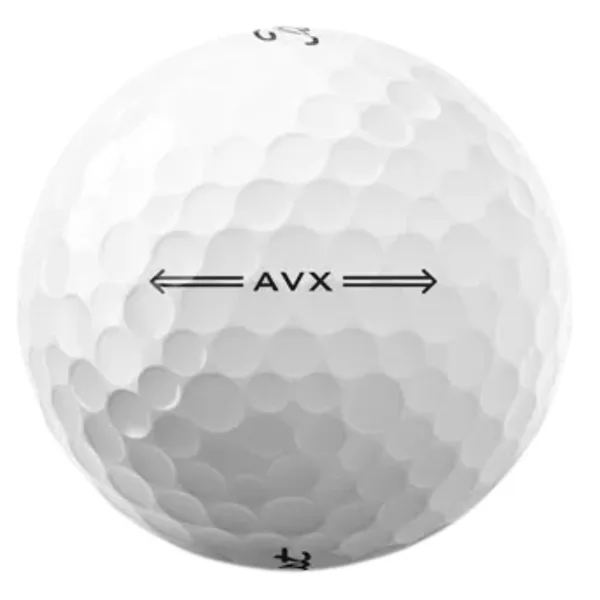
Titleist's 'other' urethane ball — low-spin, low-flying, and the softest in its line at roughly 77 compression — and the cheapest way into a real Titleist urethane ball at $49.99, $5 under the Pro V1. A faster core strips spin off the long clubs for genuine distance (271 yards of carry at 114 mph with just ~2,600 rpm of driver spin in a 62-ball test) and a penetrating, wind-cheating flight that tames a fade or slice. National Club Golfer called it a credible Pro V1 alternative and the 'best ball for £40.'
WHAT SOURCES LOVE
- +One of the longest, lowest-spin balls in a 62-ball test
- +Softest Titleist urethane (~77) — exceptional feel; $5 under the Pro V1
- +Penetrating, wind-beating flight that tames a slice
WHAT TO KNOW
- –Not a greenside-spin leader; low flight too flat for some
- –'Average' lab consistency — a step below the Pro V1
Bottom line: The value answer for the spin-heavy or slice-prone player who wants soft-feel Titleist distance — real urethane from the category leader for value-premium money.
Read full review →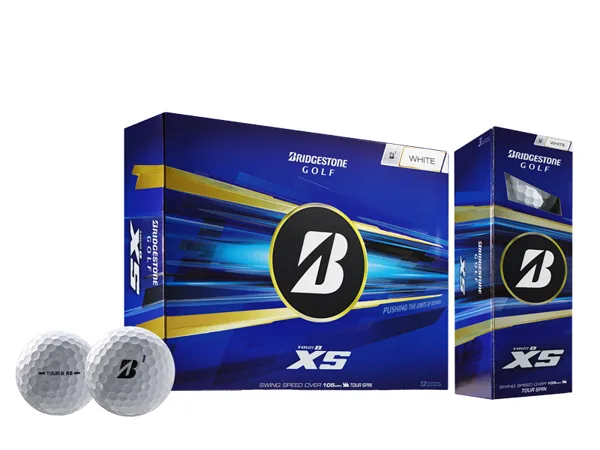
The soft, high-spin tour ball Tiger Woods helped build — and, at $54.99, tour-level greenside bite for the lowest price in the big-brand tier (a full $3 under the $57.99 Chrome Tour and TP5). Its REACTIV iQ urethane cover produces some of the highest wedge spin in the entire ball-testing field, wrapped around one of the softest 'tour' compressions in the game (~85). For 2026 a new VeloSurge core-mantle adds ball speed and a more wind-stable flight without giving up the spin. It's a spin-first ball built for 105+ mph swings, so it isn't the raw-distance leader.
WHAT SOURCES LOVE
- +Some of the highest wedge spin in the entire test field
- +Soft ~85 'tour' compression; the ball Tiger helped build
- +$54.99 — undercuts the $57.99 Chrome Tour & TP5
WHAT TO KNOW
- –Spin-first — not the raw-distance leader; soft cover scuffs
- –Built for 105+ mph; thinner public consistency data
Bottom line: If your scoring lives around the greens, the Tour B XS gives you class-leading spin at the cheapest price in the premium tier — elite short-game performance without the top-of-market sticker.
Read full review →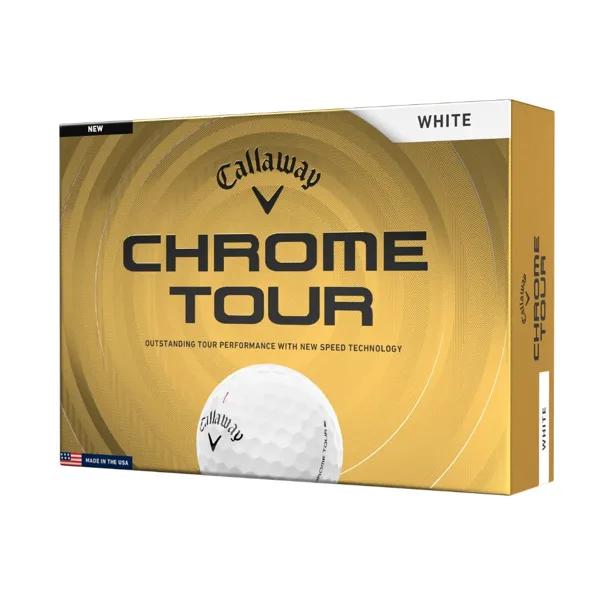
The Pro V1's most credible challenger and the robot-test distance leader — in Today's Golfer's test it was the only ball to clear 275 yards of carry at 114 mph — and the rare premium ball with a real value angle. At $57.99 it's nominally the priciest here, but Callaway's near-constant Buy-3-Get-1 promotions drop the effective cost to roughly $43.49 a dozen, undercutting Titleist's locked $54.99 pricing for a co-leader tour ball. Build quality matches the benchmark (a Ball Lab Quality Award and a perfect Good Ball Rate); the soft cover scuffs, and the mid-firm feel divides opinion.
WHAT SOURCES LOVE
- +Only ball to clear 275 yds of carry in a 62-ball test
- +Buy-3-Get-1 promos → ~$43.49/dz effective — under a Pro V1
- +Ball Lab Quality Award + perfect Good Ball Rate
WHAT TO KNOW
- –$57.99 full retail; you must buy in 4-dozen lots for the deal
- –Soft cover scuffs; mid-firm feel polarizes
Bottom line: The one premium ball that genuinely belongs in a value guide — wait for the Buy-3-Get-1 and you get the distance co-leader of the tour class for less than a Pro V1.
Read full review →Great balls — just not value plays
These are excellent golf balls that didn't make a valueguide — mostly because they sit at the top of the market with no real price edge. Worth knowing where they fit:
The best ball in golf and worth the premium if you rarely lose one — but at $54.99 it's the price-setter the value field is measured against, not itself a value play.
The firm, low-spin distance sibling of the Tour B XS at the same value-friendly $54.99 — a fast-swing distance bomber that undercuts the $57.99 tour-ball pack.
The softest feel and most greenside spin in the premium tier, but at $57.99 it sits at the very top of the market with no real value angle.
See the full Best Golf Balls 2026 ranking →·Browse all golf ball reviews →
Frequently asked questions
What is the best value golf ball in 2026?
The Kirkland Signature is our top value pick — MyGolfSpy's Best Value Golf Ball of 2025 and a genuine three-piece cast-urethane ball for roughly $1.50 a ball (about $34.99 per 2-dozen box at Costco). It out-spins a Pro V1 on full irons and wedges and, in MyGolfSpy's robot test, was actually slightly longer and straighter off the tee. The trade-off is consistency — the Ball Lab teardown rated its compression (88–103), weight, and diameter variation ‘Poor’ — and a firmer feel. If you want real urethane without the Costco gate, the Maxfli Tour ($39.99) is the next-best value.
What's the cheapest golf ball that still performs like a tour ball?
The Kirkland Signature at roughly $1.50 a ball is the cheapest genuine cast-urethane ball, and it spins more than a Pro V1 on full irons and wedges. The Maxfli Tour($39.99, cheaper in multi-buys) is a half-step up in build quality — MyGolfSpy rated its compression consistency above average. Both deliver most of the premium urethane experience for a fraction of the $54.99–$57.99 tour-ball price; the main thing you give up versus a Pro V1 is the last increment of shot-to-shot consistency.
Is a value golf ball as good as a Pro V1?
For most golfers, much closer than the price gap suggests. The Kirkland Signature out-spins a Pro V1 on full irons and wedges, and the Maxfli Tour delivers a genuine urethane cover and feel for $39.99. What you pay up for in a Pro V1is the tightest shot-to-shot consistency in golf (a perfect Good Ball Rate versus the Kirkland's ‘Poor’ variance) and a softer, more refined feel. If your scoring lives in the short game and you rarely lose a ball, the premium is real; if you lose two or more a round or swing slower, a value urethane ball is the smarter buy.
What's the best value golf ball for slower swing speeds?
The Callaway Supersoft (~$26.99, ~41 compression) is the classic value pick for slower swingers — it's easy to compress, climbs into the upper third of a robot field for carry at the slowest driver speed, and feels pillowy off every club. If you want a soft urethane ball with low-spin distance and a wind-cheating flight, the Titleist AVX (~77 compression, $49.99) is the value-premium answer and $5 under the Pro V1. Avoid the firmest value-premium balls like the Srixon Z-Star XV(102 compression) — they're built for 105+ mph swings.
Are premium tour balls ever a good value?
Yes, two ways. The Srixon Z-Star is a genuine tour ball (2nd of 62 for approach play in Today's Golfer's robot test) tuned to the softest feel in the premium tier, and with frequent buy-2-get-1 deals and ~$45 street pricing it routinely costs less than a $55 Pro V1. And the Callaway Chrome Tour — the robot-test distance leader — runs near-constant Buy-3-Get-1 promotions that drop its effective price to roughly $43.49 a dozen, undercutting Titleist's locked pricing. The Bridgestone Tour B XS also delivers elite greenside spin at $54.99, a full $3 under the $57.99 Chrome Tour and TP5.
Editorial independence:Reading the Break is not affiliated with any golf equipment manufacturer. Our scores are never influenced by affiliate relationships. Some links on this page are affiliate links — if you buy through them, we may earn a small commission at no extra cost to you. Full disclosure.