The Best Golf Balls for Slow & Moderate Swing Speeds
The low- and mid-compression balls that compress easily for distance and a soft feel if you swing under about 95 mph — ranked by fit, not just by score. Synthesized from expert reviews, robot testing, lab teardowns, and community feedback. Every score is transparent. Every claim is sourced.
Short answer: The Titleist AVX is the best all-around ball for slower and moderate swings — soft (~77 compression), easy to compress, and low-spin for real distance, with a wind-cheating flight. Genuinely slow swing? The lowest-compression pick is the Callaway Supersoft (~41) at about $27. Moderate swing that wants a tour ball? The soft-feeling TaylorMade TP5 or Srixon Z-Star.
Quick picks
At a glance
| # | Ball | Score | Compression |
|---|---|---|---|
| 1 | Titleist AVX | 8.9 | ~77 |
| 2 | Callaway Supersoft | 8.4 | ~41 |
| 3 | TaylorMade TP5 | 9.2 | ~85 |
| 4 | Srixon Z-Star | 9.0 | ~90 |
| 5 | Callaway Chrome Tour | 9.3 | ~87 |
| 6 | Bridgestone Tour B XS | 9.1 | ~85 |
| 7 | Maxfli Tour | 8.7 | ~90 |
| 8 | Titleist Pro V1 | 9.4 | ~92 |
Compression figures are the working consensus from manufacturer specs and independent (MyGolfSpy / Today's Golfer) measurements — treat them as approximate. Prices are per dozen at MSRP; tour balls discount via promotions and value balls street-price below MSRP.
How we picked these
We researched the 14 most-reviewed golf balls of 2026 and scored each with our weighted scoring system: 35% expert reviews, 25% data-driven robot and lab testing (MyGolfSpy Ball Lab, Today's Golfer's 62-ball robot), 30% forum/community opinion, and 10% retail reviews. For this guide we then ranked the eight balls that genuinely fit a slower or moderate swing (under ~95 mph) by fit— how easily they compress for distance and feel — rather than by raw consensus score. That's why the 9.4 Pro V1 sits below the 8.4 Supersoft here: the Supersoft is far easier for a slow swing to compress. We deliberately left out the firm, high-compression balls built for 105-mph-plus swings — the Pro V1x, TP5x, Chrome Tour X, Tour B X, and Z-Star XV — which you'll find listed at the bottom of this page under what to skip.
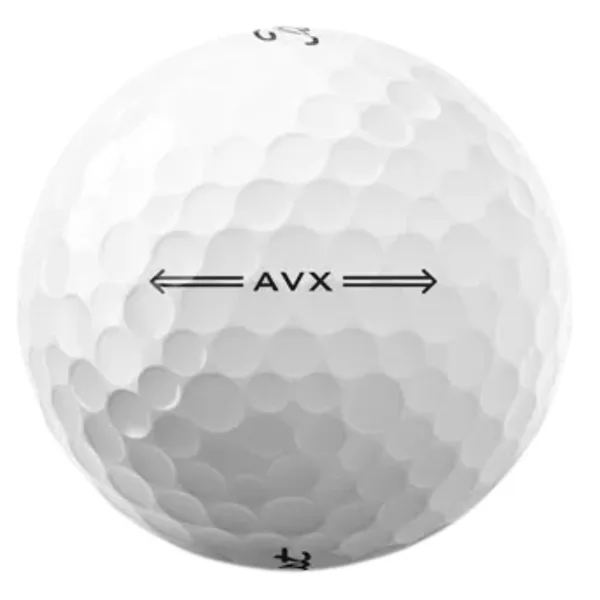
Titleist's soft, low-spin urethane ball is the most complete answer for a slower or moderate swing. At roughly 77 compression it's the softest ball in Titleist's urethane line and compresses easily, and its low long-game spin gives distance back to swings that bleed yards to too much spin — in Today's Golfer's 62-ball robot test it was one of the longest, lowest-spinning balls in the field, with a penetrating, wind-cheating flight that tames a fade or slice. MyGolfSpy calls it underrated, and at $49.99 it undercuts the Pro V1 by $5. The honest trade is greenside spin and a low flight that won't suit players who need height.
WHAT SOURCES LOVE
- +One of the longest, lowest-spin balls in a 62-ball robot test
- +Softest Titleist urethane (~77) — easy to compress, soft feel
- +Wind-cheating flight that tames a slice; $5 under the Pro V1
WHAT TO KNOW
- –Not a greenside-spin leader; the low flight is too flat for players who need height
- –Reduced spin can exaggerate a low-left miss for some swings
Bottom line: The best all-around pick for a slower or moderate swing that wants soft feel and real distance — the premium ball that genuinely rewards your speed.
Read full review →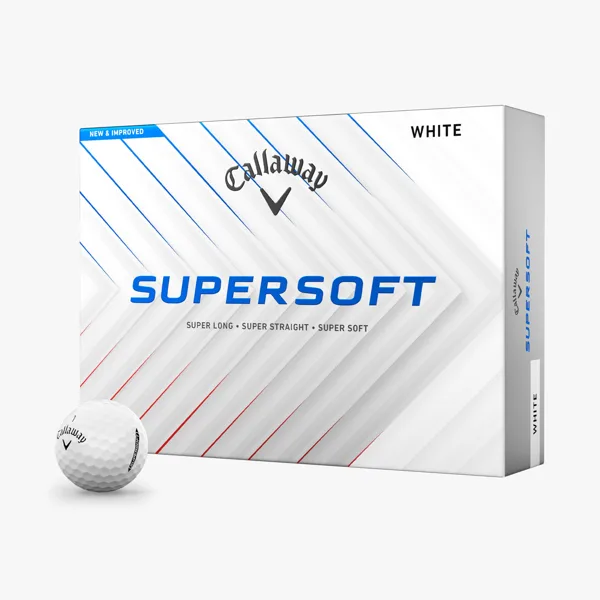
The best-selling ball in golf and the textbook answer for a genuinely slow swing. At roughly 41 compression it's among the softest balls made, so it compresses with ease, and its low-spin core actually helps slower swingers squeeze out distance — in Today's Golfer's robot test it climbed into the upper third of the field for carry at the slowest driver speed, and MyGolfSpy found it third-longest off the tee at moderate speed. Add a straight, slice-taming flight, a durable cover, and a ~$27 price (often less), and it's the easy value pick. Its limits — low greenside spin and short carry at faster speeds — simply don't apply to its target buyer.
WHAT SOURCES LOVE
- +Easiest ball to compress (~41) — built for slow swings
- +Upper third for carry at the slowest driver speed (Today's Golfer)
- +Straight, forgiving flight; ~$27/dz (often less); durable cover
WHAT TO KNOW
- –Low spin won't hold firm greens; not a urethane ball
- –One of the shortest balls at faster swing speeds
Bottom line: For genuinely slow swings, beginners, and value seekers who prize soft feel and a straight ball over premium spin — an easy, well-earned pick.
Read full review →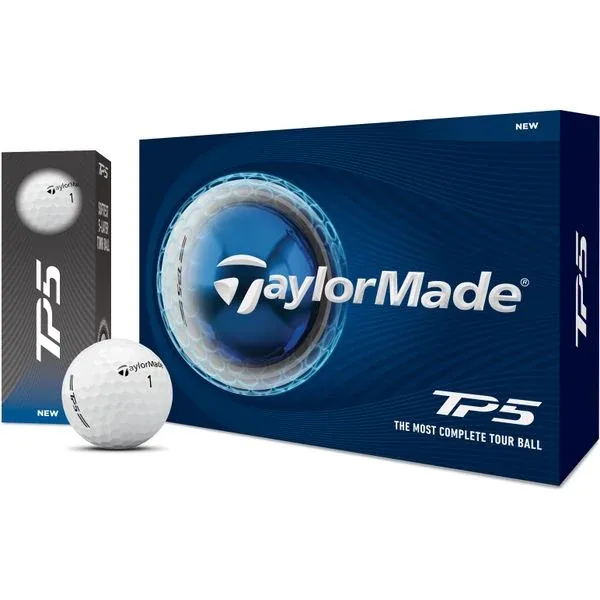
If a moderate swinger wants a genuine tour ball, the TP5 is the soft-feel choice. The softer half of golf's only five-layer ball, it pairs a 'marshmallow-soft' feel reviewers rave about with the third-highest greenside spin in a 62-ball robot test — so a 90-mph-plus player who scores with the wedges gets elite bite without a firm, clicky feel. Rory McIlroy games it, and the 2026 ball earned a Ball Lab Quality Award with a perfect Good Ball Rate. Two honest caveats for slower swings: it measures a touch firmer than its mid-80s marketing spec (fit by feel, not the number), and at $57.99 it's the priciest ball here.
WHAT SOURCES LOVE
- +Softest feel in the premium tier — 'marshmallow soft' off the wedge
- +3rd-highest greenside spin in a 62-ball test
- +Rory McIlroy's gamer; Ball Lab Quality Award, perfect Good Ball Rate
WHAT TO KNOW
- –Measures firmer than its mid-80s spec — best for ~90 mph and up
- –$57.99/dz — the most expensive ball here
Bottom line: The soft-feel tour ball for a moderate swinger who scores with the short game — most rewarding once you can compress it around 90 mph.
Read full review →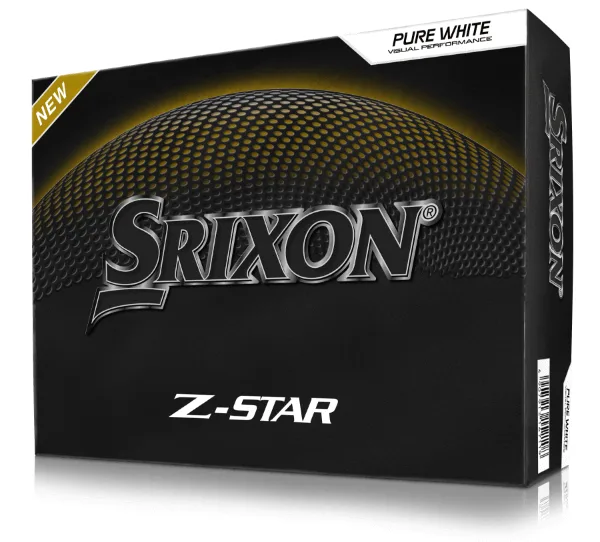
The softest-feeling premium urethane ball and the consensus value pick against the Pro V1 — built specifically for 90-mph-and-up swings. Srixon tuned the 2025 Z-Star to one of the softest compressions in its history, and it finished second of 62 balls for approach play in Today's Golfer's robot test, so a moderate swinger gets class-leading short-iron and wedge control plus a soft, muted feel. With near-constant buy-2-get-1 deals and sub-MSRP street pricing, it usually costs well under a $55 Pro V1. Genuinely slow swings (under ~90) may not fully compress it — Srixon points those players to the softer Q-Star Tour.
WHAT SOURCES LOVE
- +Softest feel in the premium urethane tier
- +2nd of 62 balls for approach play (Today's Golfer)
- +Frequent buy-2-get-1 deals undercut the Pro V1
WHAT TO KNOW
- –Built for 90+ mph — slower swings may not fully compress it
- –The shortest Z-Star at high speed; not a distance ball
Bottom line: For a moderate swinger who scores on approach play and wants soft feel and tour performance for real-world money — the smart-money tour ball.
Read full review →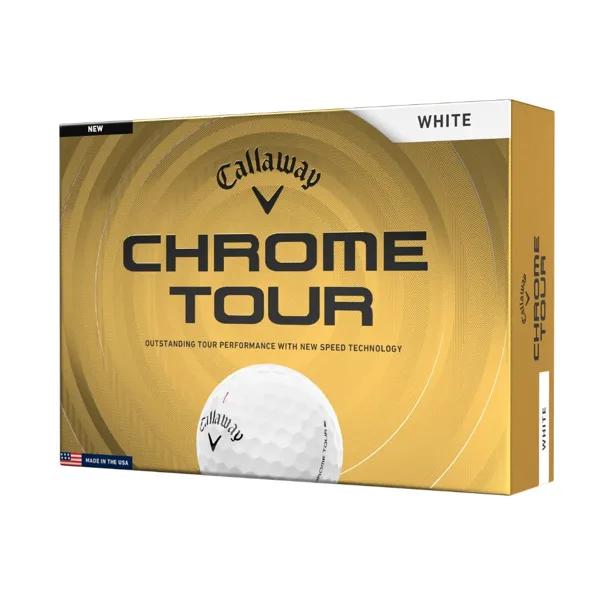
The robot-test distance leader — and it didn't only win at tour speed. In Today's Golfer's 62-ball test the Chrome Tour led for carry at every swing speed measured, including 93 mph and 78 mph, so a slower or moderate swinger chasing yards gets the longest tour ball in the class with low driver spin and a stable, wind-beating flight, plus strong greenside spin and a Ball Lab Quality Award for build quality. The caveats: the 2026 mantle is mid-firm (Callaway calls it 'more tailored toward higher swing-speed players'), the soft cover scuffs, and it's $57.99 — though frequent Buy-3-Get-1 promos drop the real price into the low-$40s.
WHAT SOURCES LOVE
- +Led for carry at every robot-tested speed — including 78 & 93 mph
- +Low driver spin plus a stable, wind-beating flight
- +Ball Lab Quality Award, perfect Good Ball Rate
WHAT TO KNOW
- –Mid-firm feel 'tailored toward higher swing speeds'; cover scuffs
- –$57.99/dz at full retail (frequent Buy-3-Get-1 promos help)
Bottom line: The distance pick for a moderate swinger who wants maximum carry and a wind-stable flight from a true tour ball.
Read full review →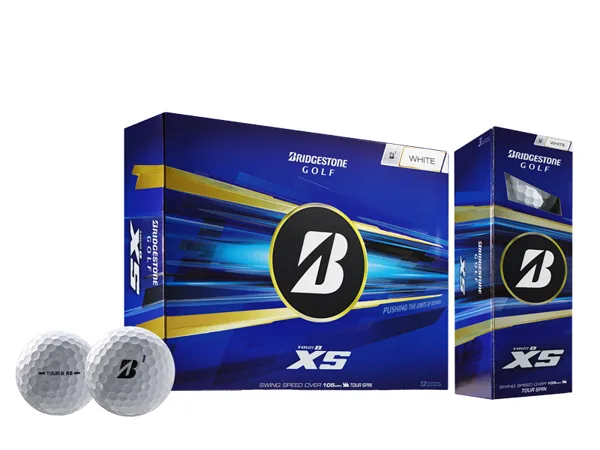
The soft, high-spin tour ball Tiger Woods helped build — and the answer for a moderate swinger whose scoring lives around the green. At roughly 85 it's one of the softest 'tour' compressions, with a REACTIV iQ cover that produces some of the highest wedge spin in all of ball testing (north of 8,000 rpm in one test), and the 2026 VeloSurge core improved its wind stability. The honest fit note: Bridgestone positions the XS for 105-mph-plus swings and steers genuinely slow players to the lower-compression Tour B RX/RXS — so this is the pick for the upper, 90–95-mph end of 'moderate' who wants elite greenside bite and a soft feel.
WHAT SOURCES LOVE
- +Some of the highest greenside and wedge spin in golf
- +One of the softest 'tour' compressions (~85); soft, responsive feel
- +Tiger Woods' design DNA; improved wind-stable 2026 flight
WHAT TO KNOW
- –Built for 105+ mph — genuinely slow swings should look at the Tour B RX/RXS
- –Soft cover scuffs; full premium price
Bottom line: For the upper end of 'moderate' who scores with the wedges and wants the softest, highest-spinning tour ball — fit it to your speed.
Read full review →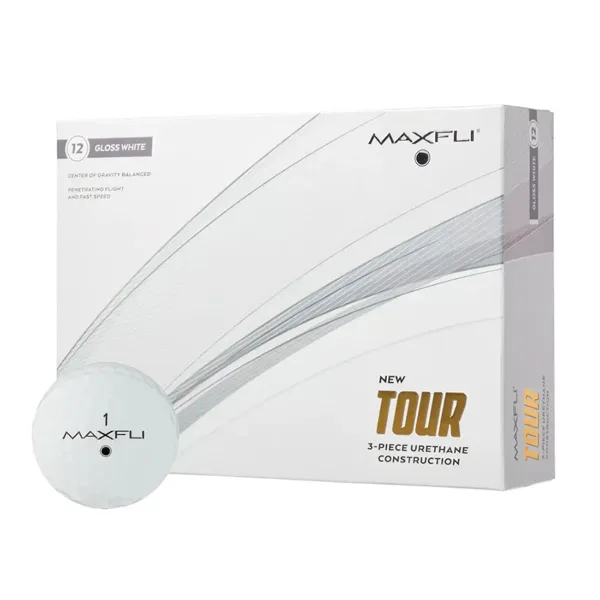
The value-urethane ball that punches far above its $39.99 price — DICK'S' Foremost-built three-piece ball gives a slower or moderate swinger real greenside grab, a soft-but-crisp feel, and a penetrating mid flight for roughly a third less than a Pro V1. MyGolfSpy calls it one of the most consistent balls without a Titleist logo on it. It runs mid-to-firm (published figures vary, roughly 85–95), so if you swing under ~90 mph or launch it too high, the softer Tour S sibling is the one in the family to try first — but for value urethane, the standard Tour is one of the smartest dozens in golf.
WHAT SOURCES LOVE
- +Real cast-urethane performance for ~$40/dz (often ~$30 in bulk)
- +'One of the most consistent balls without a Titleist logo' (MyGolfSpy)
- +Soft-but-crisp feel; balanced, penetrating mid flight
WHAT TO KNOW
- –Mid-to-firm (~85–95) — slower swings may prefer the softer Tour S
- –Greenside spin ~10% under a Pro V1; sold only at DICK'S / Golf Galaxy
Bottom line: The value pick — most of a tour ball's urethane experience for a third less, ideal if you lose a few balls a round.
Read full review →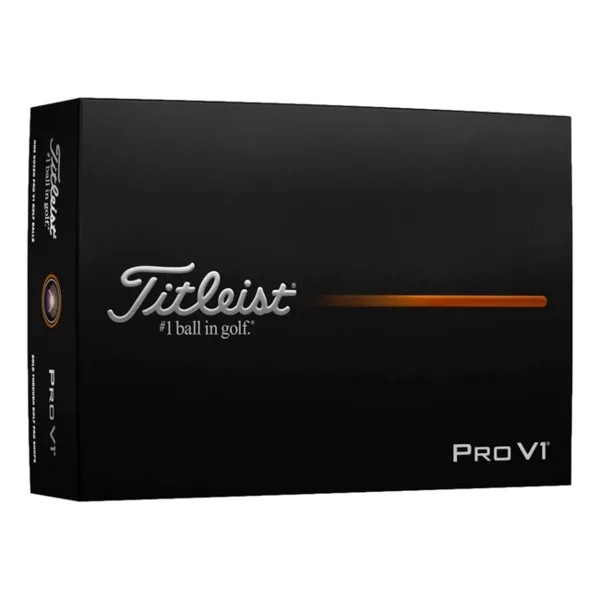
The No. 1 ball in golf earns a place here for the upper end of this audience. At roughly 92 compression it's the firmest ball on this list, so it's best suited to moderate swingers around 90–95 mph rather than genuinely slow ones — but for that player it delivers the most complete, most consistent, do-everything performance in golf, a soft feel for its class, and a perfect 100% Good Ball Rate. The 2025 high-gradient core trims long-game spin for a few extra yards. If your swing is closer to 95 than 80, this is the benchmark; below that, the softer balls higher on this list will compress more easily.
WHAT SOURCES LOVE
- +The most complete, most consistent ball in golf — perfect Good Ball Rate
- +Soft feel for its class; 2025 core adds a few yards
- +Most-played ball on tour; MyGolfSpy's calibration standard
WHAT TO KNOW
- –Firmest ball here (~92) — best for ~90–95 mph, not genuinely slow swings
- –$54.99/dz; not the distance or greenside-spin leader
Bottom line: The benchmark for the upper end of this audience (90–95 mph) — for slower swings, the softer, lower-compression balls above will reward you more.
Read full review →Skip these if you swing slower
These are excellent golf balls — but they're firm, high-compression models engineered for 105-mph-plus swings. A slower or moderate swing can't fully compress them, so you give up both distance and feel. If you're tempted by one, its softer sibling above is the better fit:
The firmer, higher-flying Pro V — robot-tested around 108 compression. A superb ball, but built for faster swings; slower players get more from the softer Pro V1 or AVX above.
Callaway's firmest, highest-spinning tour ball (~98) — the longest 'X' ball at speed and a shot-shaper's tool, but too firm to reward a slower swing. The standard Chrome Tour above is the softer one.
The faster, firmer, lower-spinning five-layer ball — a wind-cutting distance bomber for fast swings, and firmer than the TP5 above that moderate swingers should choose instead.
Tiger's current gamer — fast, low-spin, and explicitly built for 105-mph-plus swings. The Tour B XS above is the softer, slower-swing-friendlier option in the family.
The firmer, faster Z-Star (~102) tuned for 100-mph-plus swings — the standard Z-Star above is the softer one Srixon builds for moderate speeds.
Frequently asked questions
What is the best golf ball for slow and moderate swing speeds in 2026?
The Titleist AVX is our top all-around pick. At roughly 77 compression it's the softest ball in Titleist's urethane line and compresses easily, while its low long-game spin gives distance back to swings that lose yards to too much spin — in Today's Golfer's 62-ball robot test it was one of the longest, lowest-spinning balls in the field — and it costs $5 less than the Pro V1. For a genuinely slow swing, the lowest-compression pick is the Callaway Supersoft (~41 compression), the best-selling ball in golf at about $27 a dozen, which finished in the upper third of a robot field for carry at the slowest driver speed. Moderate swingers who want a true tour ball should look at the soft-feeling TaylorMade TP5 or the Srixon Z-Star (built for 90+ mph).
Does golf ball compression matter for slow swing speeds?
It matters more for feel and consistency than for raw distance, but it matters. Compression is roughly how much a ball deforms at impact: lower-compression balls (the Supersoft is ~41, the AVX~77) deform more easily, so a slower swing can compress them fully for a soft, comfortable feel and a predictable launch. A slower player can technically play a firm, high-compression ball, but they'll struggle to compress it, often leaving it feeling hard and unresponsive. For most golfers under about 95 mph of driver speed, a low- or mid-compression ball is the easier, more rewarding fit — which is exactly how this list is ranked.
What counts as a slow or moderate swing speed?
As a rough guide, a “slow” driver swing speed is under about 85 mph (most players who carry the driver around 200 yards or less), and “moderate” is roughly 85–95 mph. The fastest amateurs and tour players sit well above 100 mph. The practical takeaway: if you swing under ~85 mph, lean toward the lowest-compression balls (Supersoft, AVX); if you're in the 90–95 mph range you can compress a soft tour ball (TP5, Z-Star, Tour B XS) and benefit from its greenside spin. The firmest balls — Pro V1x, TP5x, Chrome Tour X, Tour B X, Z-Star XV — are built for 105-mph-plus swings and are the wrong fit below that.
Should a slower swinger play a soft ball or a tour ball?
It depends on where you score. If you simply want the easiest compression, the softest feel, a straight flight and the best value, a low-compression ball like the Callaway Supersoft (~41) or the soft urethane Titleist AVX (~77) is the smart pick. If you're a moderate swinger (around 90 mph and up) whose scoring lives in the short game, you can compress a soft tour ball and should — the TP5, Z-Star, and Tour B XSdeliver far more greenside spin than a soft 2-piece ball. What you should avoid is a firm, high-compression ball built for fast swings (Pro V1x, TP5x, Chrome Tour X, Tour B X, Z-Star XV): you won't compress it, and you'll lose both distance and feel.
Are expensive tour balls worth it for a slower swing?
For distance, usually not — a slower swing can't generate the ball speed that separates a $55 tour ball from a value ball, so the premium buys you greenside spin and shot-to-shot consistency more than yards. The Callaway Supersoft (~$27) delivers soft feel and competitive slow-speed distance for half the price, and the Maxfli Tour ($39.99) gives you a genuine cast-urethane cover with real greenside grab for about a third less than a Pro V1. Pay up for a premium urethane ball (AVX, TP5, Z-Star) only if you swing around 90 mph or faster and your scoring genuinely depends on stopping the ball on firm greens.
Editorial independence:Reading the Break is not affiliated with any golf equipment manufacturer. Our scores are never influenced by affiliate relationships. Some links on this page are affiliate links — if you buy through them, we may earn a small commission at no extra cost to you. Full disclosure.