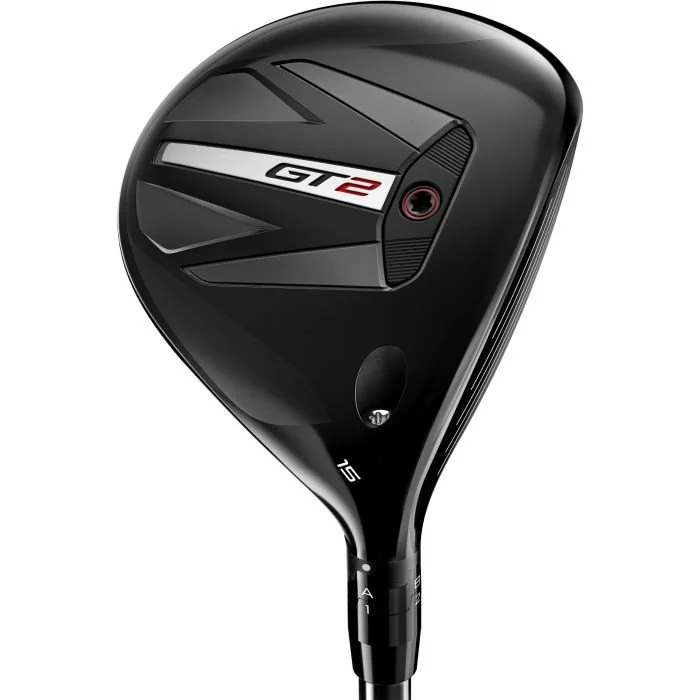
Titleist GT2 Fairway Wood
Golf Digest Gold Medal winner with five loft options from 13.5° to 21° — the forged L-Cup face and Thermoform Crown deliver easy launch, tour-refined acoustics, and forgiveness that works from tee to fairway to rough.
We may earn a commission if you buy through this link — it never affects our scores or the price you pay.
The consensus
The Titleist GT2 is the easy-launch fairway wood in Titleist's GT lineup — a Golf Digest Gold Medal winner praised for effortless launch, tour-refined acoustics, and forgiveness that belies its premium pedigree. The forged 465 stainless steel L-Cup face wraps around the bottom of the head, preserving ball speed on low-face and off-center strikes that would lose significant distance in previous Titleist fairway woods. The Seamless Thermoform Crown — made from a Proprietary Matrix Polymer roughly 5x lighter than steel — moves weight low and toward the face for higher launch and lower spin than the TSR2 predecessor.
Five loft options (13.5° through 21°) cover an unusually wide range for a single model. The 13.5° plays like a mini-driver at 250-260 yards, while the 21° fills the increasingly popular 7-wood slot. The 16-position SureFit Hosel provides +1.5/-0.75 degrees of loft and lie adjustment, though it lacks the GT3's CG Track for shot-shape tuning. Sound and feel are the GT2's calling card — GolfMagic called it 'probably the best feeling and sounding fairway woods of 2024,' with a mid-tone, slightly woodsy impact that's unmistakably Titleist.
The main criticism is that the GT2 is less forgiving than the GT1, Titleist's dedicated high-MOI option. Multiple reviewers recommended the GT1 for golfers above 20 handicap who need maximum error correction. Higher spin compared to the GT3 also limits the GT2's appeal for very fast swingers chasing maximum distance. Now discounted from $399 to ~$329, the value proposition is considerably stronger than at launch — at this price point, you're getting tour-level sound and feel with genuine forgiveness for roughly the same cost as mid-tier competitors.
Golf Digest Gold Medal winner with five loft options from 13.5° to 21° — the forged L-Cup face and Thermoform Crown deliver easy launch, tour-refined acoustics, and forgiveness that works from tee to fairway to rough.
Category ratings
Where to buy
Prices checked June 2026. We may earn a commission from links above at no extra cost to you.
What the community loves
The CG is positioned lower and closer to the face than the TSR2 predecessor, producing effortless launch from any lie. Multiple reviewers noted it gets the ball airborne easily — Today's Golfer gave it a perfect 5/5 calling it the basis for the entire metalwoods category.
The L-Cup face design wraps around the bottom of the head, preserving ball speed on low-face and off-center strikes. Golf Digest testers found mishits weren't penalized, and Golf.com noted even fat shots stayed on line. Independent Golf Reviews measured only 4.9 yards of dispersion.
Repeatedly described as among the best-sounding fairway woods available. The Proprietary Matrix Polymer crown (5x lighter than steel) maintains classic Titleist acoustics — a mid-tone, slightly woodsy but powerful impact. GolfMagic called it 'probably the best feeling and sounding fairway woods of 2024.'
Works off the tee (the 13.5° plays like a mini-driver at 250-260 yards), off the fairway, from the rough, and from tight lies. The flattened sole sits flush to the ground. MyGolfSpy Forum testers called it 'incredibly versatile from a variety of lies.'
Tour-refined pear shape with high-gloss black crown and simple GT alignment aid. Golf Monthly praised the classic Titleist look that inspires confidence at address. The understated design appeals to players who value refinement over flash.
Available in 13.5°, 15°, 16.5°, 18°, and 21° — covering 3-wood through 7-wood territory. The 13.5° operates as a mini-driver alternative, and the 21° fills the increasingly popular 7-wood slot. No competitor offers this breadth in a single model.
What to watch out for
The GT1 has higher MOI for golfers needing maximum error correction. The GT2 is forgiving by tour-fairway standards but not a super-game-improvement club. Higher handicappers who frequently miss across the face should consider the GT1.
At $399 MSRP (now discounted to ~$329), it's at the higher end of the market. Premium shaft options push the price to $519+. The discount makes it a much stronger value proposition than at launch.
Multiple reviewers recommend something with higher MOI for golfers at the top end of the handicap scale. Mid-to-low handicaps get the most benefit from the GT2's balance of performance and refinement.
Golfers specifically seeking low-spin performance for maximum distance will find the GT3 produces a more penetrating flight. The GT2's higher launch and spin is a feature for most but a limitation for fast swingers.
Is it right for your game?
The GT2 vs GT3 decision is the most common question across sources. The GT2 is for golfers who want easy launch, high flight, and forgiveness — it's the 'set it and forget it' option. The GT3 is for shot-makers who want workability, lower spin, and CG Track adjustability. If you're not sure which one you need, you want the GT2.
What real people are saying
18 quotes from across the web, grouped by 9 themes. Click a theme to read the individual quotes.
Specifications
Available shafts (no upcharge)
Premium shafts available at additional cost: Graphite Design Tour AD VF, Tour AD UB, Tour AD DI
All sources analyzed
This review synthesizes opinions from 13 independent sources. Every claim on this page can be traced back to its original source. No manufacturer relationship or compensation.
The consensus score is built in four layers: raw source collection, normalization to a 0-10 scale, credibility-weighted combination, and quality adjustments.
Expert reviews (35% weight) are scored from language intensity and any numerical ratings provided. Data-driven testing (25%) converts product rank within the test group to a percentile score. Forum posts (30%) are AI-classified by sentiment, weighted by substantiveness. Retail reviews (10%) convert 5-star ratings with a 0.75x credibility discount to correct for systematic inflation.
Three quality adjustments are then applied: a source diversity bonus (up to +0.3 for coverage across all source types), a conflict penalty (up to -0.3 when sources strongly disagree), and recency weighting (recent reviews weighted higher than older ones).