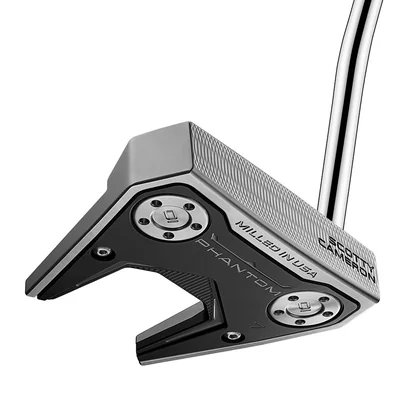
Scotty Cameron Phantom 7 Putter
The angular wingback mallet built for maximum stability and alignment — Scotty Cameron's highest-MOI Phantom with the same breakthrough SCS insert technology, designed for straight-back, straight-through strokes.
We may earn a commission if you buy through this link — it never affects our scores or the price you pay.
The consensus
The 2026 Scotty Cameron Phantom 7 is the angular wingback mallet designed for golfers who want maximum stability and the strongest alignment cues in the Phantom lineup. Sharing the same breakthrough Studio Carbon Steel (SCS) insert and chain-link face milling as the Phantom 5, the Phantom 7 extends the footprint with sharp, angular wings that create a rail-like visual system at address. Across 10 sources spanning expert reviews, data-driven testing, and forum discussions, the Phantom 7 earns consistent praise for its alignment aids, stability, and premium feel — though the larger head size and $499 price tag limit its appeal compared to more compact or affordable alternatives.
Where sources agree most strongly: alignment and stability. Today's Golfer highlighted the Phantom 7's 'lovely long alignment line' and called it a 'brilliant choice' for premium stability in 2026. The larger front-to-back footprint delivers the highest MOI in the Phantom range, and the new double-bend shaft option (7.2 model) adds a face-balanced configuration specifically designed for straight-back, straight-through strokes. The SCS insert earns the same universal feel praise as the Phantom 5, with a responsive face that Today's Golfer described as producing 'a lovely smooth roll across the surface of the green.' The gunmetal PVD finish is more durable and less glare-prone than previous chrome finishes.
Where the consensus narrows: the Phantom 7 is purpose-built for straight strokes and committed mallet users. Golfers with significant putting arc are better served by the Phantom 5.5 or the 7.5 flow neck variant. Forum discussions consistently compare the Phantom 7 to the TaylorMade Spider Tour X — both are high-MOI mallets with strong alignment, but the Spider Tour delivers similar stability at $350 versus $499. The Cameron premium buys superior feel, craftsmanship, and resale value, but the pure forgiveness gap is narrow. For blade players exploring mallets, the compact Phantom 5 is the better entry point; the Phantom 7 is for players who have already committed to a mallet and want the most alignment confidence and stability available in the Cameron lineup.
The angular wingback mallet built for maximum stability and alignment — Scotty Cameron's highest-MOI Phantom with the same breakthrough SCS insert technology, designed for straight-back, straight-through strokes.
Category ratings
What the community loves
The Phantom 7's sharp angular wings and extended rear geometry create rail-like visual alignment cues that multiple sources praised as the strongest in the lineup. Today's Golfer highlighted the 'lovely long alignment line that looks great sat behind a golf ball,' and the larger front-to-back footprint gives golfers more visual reference for squaring the face at address.
The Phantom 7's larger footprint and perimeter-weighted wingback design deliver the highest moment of inertia in the Phantom family. Today's Golfer called it a 'brilliant choice' for premium stability, and the design resists twisting on off-center strikes more effectively than the compact Phantom 5.
The Phantom 7 shares the Studio Carbon Steel insert and chain-link face milling that earned universal praise across the 2026 Phantom lineup. The softer-than-Teryllium feel and refined sound are identical to the Phantom 5, delivering premium feedback regardless of which head shape you prefer.
New for 2026, the Phantom 7 adds a double-bend shaft configuration designed with direct tour player feedback. This provides a more face-balanced setup with an alternative look at address, complementing the existing plumbing neck and flow neck options for golfers who prefer different visual presentations.
New sole plates help the putter sit more flush to the ground from various lies and hand positions, creating a more consistent setup. Combined with the rounded topline, the 2026 update addresses practical feedback from tour players about how the putter presents at address.
What to watch out for
The Phantom 7's angular wings and extended footprint make it one of the larger Scotty Cameron putters. Players who prefer a compact, blade-like profile at address will find it visually overwhelming. Forum users consistently note that the Phantom 5 is the better choice for golfers transitioning from blades, while the 7 appeals to committed mallet players.
At $499, the Phantom 7 competes with the TaylorMade Spider Tour ($350) and Ping models that deliver comparable or superior forgiveness at lower prices. Forum discussions frequently compare the Phantom 7 to the Spider Tour X, with opinions split on whether the Cameron craftsmanship premium is justified for a high-MOI mallet.
The standard Phantom 7 configuration has minimal toe flow, making it best suited for straight or nearly straight putting strokes. Golfers with a significant arc may find the face doesn't release naturally through impact. The 7.5 flow neck variant addresses this but adds another decision point.
Like the Phantom 5, some testers found the Phantom 7 lighter than expected compared to competitors like the Spider Tour, which can affect distance control feel on long lag putts. Players accustomed to heavier mallet heads may need an adjustment period.
Is it right for your game?
The Phantom 7 draws consistent praise for its alignment system and larger footprint stability. Forum discussion frequently centers on how it compares to the Phantom 5 — the 7 wins on forgiveness, the 5 wins on feel precision. If you're choosing between the two, your handicap and stroke consistency should drive the decision more than brand preference.
What real people are saying
13 quotes from across the web, grouped by 6 themes. Click a theme to read the individual quotes.
Specifications
Available shafts (no upcharge)
Premium shafts available at additional cost: Graphite Design Tour AD VF, Tour AD UB, Tour AD DI
All sources analyzed
This review synthesizes opinions from 10 independent sources. Every claim on this page can be traced back to its original source. No manufacturer relationship or compensation.
The consensus score is built in four layers: raw source collection, normalization to a 0-10 scale, credibility-weighted combination, and quality adjustments.
Expert reviews (35% weight) are scored from language intensity and any numerical ratings provided. Data-driven testing (25%) converts product rank within the test group to a percentile score. Forum posts (30%) are AI-classified by sentiment, weighted by substantiveness. Retail reviews (10%) convert 5-star ratings with a 0.75x credibility discount to correct for systematic inflation.
Three quality adjustments are then applied: a source diversity bonus (up to +0.3 for coverage across all source types), a conflict penalty (up to -0.3 when sources strongly disagree), and recency weighting (recent reviews weighted higher than older ones).