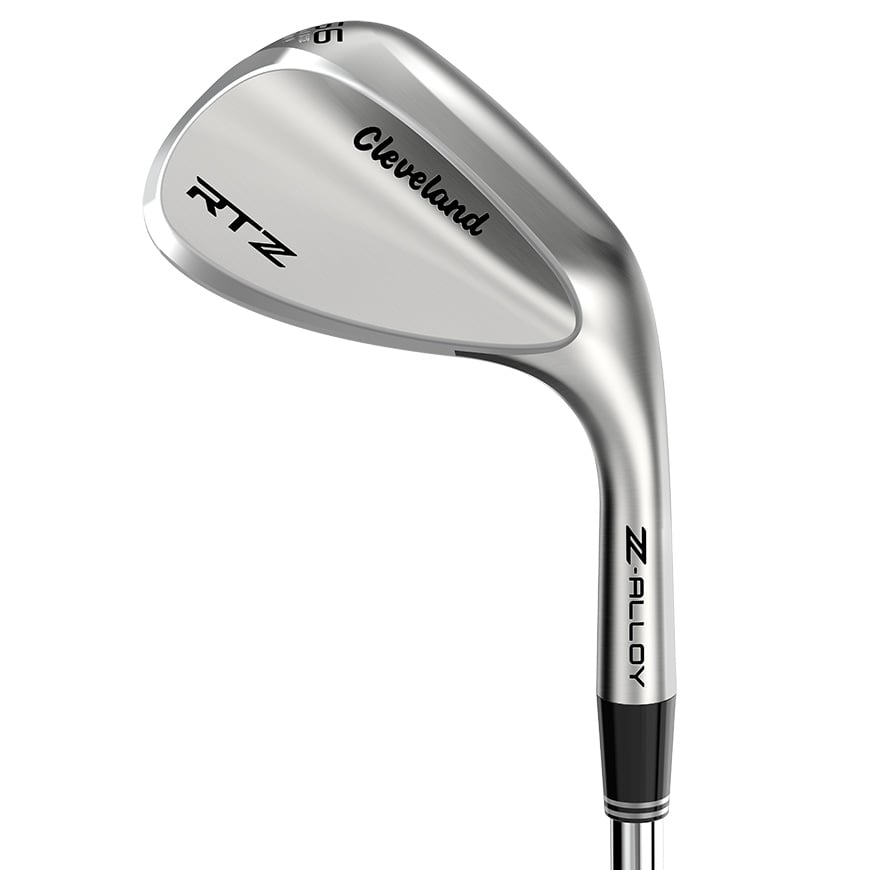
Cleveland RTZ Wedge
The successor to the RTX 6 ZipCore, built around a new low-density Z-Alloy steel that Cleveland says is roughly 10% softer — pairing class-leading spin and wet-weather grip with a clean, premium look at a price well below the tour benchmarks, earning a Golf Digest 2026 Hot List Gold Medal and broad praise across 17 sources.
We may earn a commission if you buy through this link — it never affects our scores or the price you pay.
The consensus
The Cleveland RTZ is the successor to the popular RTX 6 ZipCore and the brand's flagship player-preferred wedge, released on January 17, 2025 and earning a Gold Medal on Golf Digest's 2026 Hot List. Its signature change is the head material itself: Z-Alloy, a new low-density steel Cleveland developed specifically for wedges and says is roughly 10% softer than the 8620 carbon steel of the RTX 6, with better rust resistance so the face holds its spin properties longer. Across 17 sources spanning expert reviews, Hot List and best-of testing, forum feedback, and retail ratings, the consensus is strongly positive — the RTZ is repeatedly described as one of the cleanest, most premium-looking wedges on the market, and as a value standout that delivers tour-level spin for less than the Titleist and Callaway benchmarks.
Where sources agree most strongly: spin, looks, and value. The RTZ stacks three groove technologies — sharper, deeper UltiZip grooves, Rotex face milling, and the new HydraZip system of laser-milled lines and precision face blasts configured by loft grouping — explicitly to maintain spin when the face is wet, and reviewers from Today's Golfer to GolfWRX members reported genuinely fast-grabbing spin and strong stopping power across lies and conditions. The new Adapt grind (the line's only full-face-groove option, with a higher toe for open-faced finesse and sand) joins the classic Full, Mid, and Low grinds across a 46-64° loft range, and bunker play was a recurring highlight. At $169.99 — versus $199+ for a Vokey SM11 — value was praised across the expert and retail coverage.
Where the consensus fractures: feel and fitting depth. The new Z-Alloy splits opinion — Golf Monthly called it among the softest wedges available, while Golfalot found it firmer and spinnier than the softest forged blades and rated feel only middling — so feel here is genuinely a matter of preference rather than a clear win, and it remains a cast (not forged) head. The four-grind matrix is narrower than Vokey's six grinds and 27 configurations, left-handed availability is limited, and the Tour Satin finish shows wear quickly. It is also still a player-shaped head with modest forgiveness; chronic mishitters will get more help from Cleveland's CBZ cavity-back. But for better players, mid-handicappers with sound technique, and anyone seeking premium spin and looks without the benchmark price, the RTZ is one of the most compelling wedges of its generation — and the clearest value play near the top of the category.
The successor to the RTX 6 ZipCore, built around a new low-density Z-Alloy steel that Cleveland says is roughly 10% softer — pairing class-leading spin and wet-weather grip with a clean, premium look at a price well below the tour benchmarks, earning a Golf Digest 2026 Hot List Gold Medal and broad praise across 17 sources.
Category ratings
What the community loves
The RTZ's headline change is Z-Alloy, a new low-density steel Cleveland developed specifically for wedges and says is roughly 10% softer than the 8620 carbon steel used in the RTX 6 ZipCore. Reviewers consistently single out the feel as a step up — Golf Monthly went as far as calling it “one of the softest feeling wedges on the market,” describing the ball as staying on the face slightly longer with a soft-but-communicative response and a crisp, concise sound at impact. Z-Alloy is also more rust-resistant than previous Cleveland steels, so the face stays cleaner and holds its spin properties longer.
Spin is the most-praised performance trait across the coverage. The RTZ stacks three groove technologies — sharper, deeper, more closely-spaced UltiZip grooves; Rotex face milling; and the new HydraZip system of laser-milled lines and precision face blasts, configured differently by loft grouping — explicitly to maintain spin when the face or ball is wet. Cleveland's R&D claims roughly 500 rpm more spin on short shots and up to ~800 rpm more on full swings versus comparable wedges; while those are the manufacturer's figures, independent testers from Today's Golfer to GolfWRX members corroborated genuinely strong, fast-grabbing spin and excellent stopping power from a variety of lies and conditions.
Reviewers repeatedly describe the RTZ as one of the cleanest, most premium-looking wedges on the market — a compact, uncluttered head with minimal branding, a rounded leading edge, and milling that frames the grooves nicely at address. Plugged In Golf called the line “irresistible” on looks and Golfalot rated it “fantastic looking,” with the Black Satin finish drawing particular admiration. It is a player-preferred profile that still sits behind the ball without intimidating mid-handicappers.
Alongside the classic Full, Mid, and Low sole grinds, the RTZ introduces the new Adapt grind — the line's only full-face-groove option, with a higher toe profile and extra leading-edge relief built on tour for open-faced finesse shots, flops, and bunker play. Combined with a loft range that runs all the way from 46° up to 64°, it gives the RTZ real shot-making range, and bunker performance was called out as a strength in multiple reviews. ZipCore (a low-density core that removes weight from the heel and hosel) also raises MOI for a touch more stability than a traditional blade.
At $169.99 for the Tour Satin and Black Satin finishes ($189.99 for the raw Tour Rack), the RTZ undercuts the Titleist Vokey SM11 ($199+) and Callaway Jaws by a meaningful margin while delivering performance reviewers placed right alongside them. Golfalot framed the RTZ as competing on performance “despite the lower price,” and value was a recurring theme across the expert and retail coverage. For golfers building a full wedge set, the saving over a multi-wedge purchase is substantial without a felt drop in quality.
What to watch out for
The new Z-Alloy is the RTZ's biggest talking point, and reviewers genuinely split on it. Golf Monthly called it among the softest wedges available, but Golfalot found it “perhaps not the softest out there,” describing a slightly firmer, spinnier sensation than the very softest forged competitors, and rated feel a middling 3 out of 5. It is still a cast (not forged) head, so players chasing the buttery feel of a forged blade should hit it before buying — feel here is more a matter of preference than a clear win.
The four-grind matrix (Full, Mid, Low, Adapt) is versatile but narrower than the six grinds and 27 configurations Titleist's Vokey SM11 offers, so the most fitting-obsessed players have fewer turf-interaction combinations to dial in. Today's Golfer also flagged the limited left-handed availability relative to Vokey — a real drawback for left-handers, who get only a subset of the lofts and grinds.
Several reviewers noted the Tour Satin finish picks up cosmetic scuffing and bag chatter faster than they would like; Golf Monthly called this out directly. The Black Satin holds up a touch better cosmetically, and the raw Tour Rack is designed to patina and rust over time by intent — which some players love and others dislike — but buyers who want their wedge to stay pristine should be aware the standard satin is not the most wear-resistant.
ZipCore adds a little stability, but the RTZ is still a compact, player-preferred head that rewards solid contact and does not bail out chunks or thin strikes the way a wide-sole, cavity-back game-improvement wedge does. Cleveland's own CBZ cavity-back wedge exists precisely for that higher-handicap player; golfers who frequently mishit greenside shots will find more help there than in the RTZ.
Is it right for your game?
What real people are saying
12 quotes from across the web, grouped by 6 themes. Click a theme to read the individual quotes.
Specifications
Available shafts (no upcharge)
Premium shafts available at additional cost: Graphite Design Tour AD VF, Tour AD UB, Tour AD DI
All sources analyzed
This review synthesizes opinions from 17 independent sources. Every claim on this page can be traced back to its original source. No manufacturer relationship or compensation.
The consensus score is built in four layers: raw source collection, normalization to a 0-10 scale, credibility-weighted combination, and quality adjustments.
Expert reviews (35% weight) are scored from language intensity and any numerical ratings provided. Data-driven testing (25%) converts product rank within the test group to a percentile score. Forum posts (30%) are AI-classified by sentiment, weighted by substantiveness. Retail reviews (10%) convert 5-star ratings with a 0.75x credibility discount to correct for systematic inflation.
Three quality adjustments are then applied: a source diversity bonus (up to +0.3 for coverage across all source types), a conflict penalty (up to -0.3 when sources strongly disagree), and recency weighting (recent reviews weighted higher than older ones).